

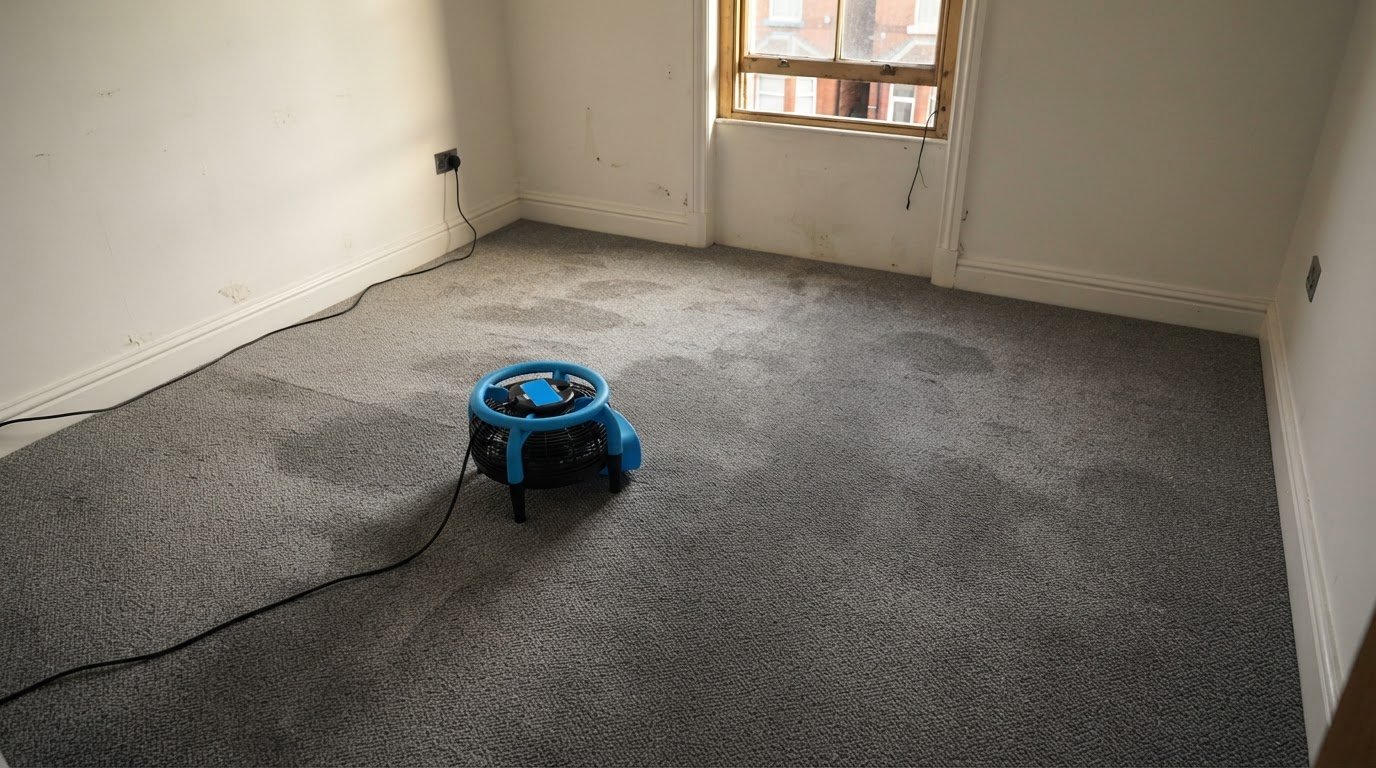
Most professionally cleaned carpets dry within 4 to 24 hours. If you’re wondering how long it takes for carpets to dry after cleaning, the answer depends on the carpet, the cleaning treatment and the conditions in the room.
It’s understandable to want your rooms back to normal quickly. Lightly cleaned carpets may dry in 2 to 4 hours, while deeper pile, heavier soiling, cooler temperatures and high humidity can extend the wait.
This guide explains what affects how long carpets take to dry after cleaning, how airflow helps and when to limit foot traffic. You’ll also learn why a carpet may ripple as it dries and what to consider before moving furniture back.
Key Takeaways
- Keep shoes off the carpet until it feels fully dry; if you need to cross it sooner, clean socks or indoor footwear can help limit re-soiling.
- Understand how carpet pile, room conditions and the amount of soil affect the drying window.
- See how ventilation and moving air can support drying, and why cold or humid conditions may slow it down.
- Learn why rippling may appear as a carpet dries and what to consider before moving furniture back.
Avoiding foot traffic while a carpet dries
Keep foot traffic light until the carpet feels dry. Damp fibres can pick up dirt from shoes and socks. Light walking may be fine after a few hours if you wear clean socks or indoor footwear. Keep outdoor shoes off until the carpet is completely dry to reduce re-soiling.
Check below the surface, too. Gently press a clean, dry hand into a thicker area or a spot that received extra cleaning. If the fibres or backing still feel damp, keep people and pets off that section. Deep pile can hold moisture below the tips, so a dry-looking surface does not necessarily mean the whole carpet is ready.
Professional extraction helps control moisture during cleaning. Extraction machines remove more water than hire machines, while repeated wetting can leave carpet wetter. DIY machines may apply too much water, lack strong suction and leave detergent residue. Dedicated specialists such as Cleaning Guru Carpet and Home Cleaning rely on thorough extraction to limit unnecessary moisture and support a cleaner finish and a more manageable drying period.
Prolonged dampness can cause a musty odour and create conditions that encourage mould growth. If the carpet remains wet, improve airflow and avoid covering it with rugs or furniture, which can slow drying. A lingering damp smell is a reason to deal with the moisture, not mask the odour.
Keep furniture off the carpet until it is completely dry. If it must be moved back sooner, place plastic or aluminium foil under each leg to help prevent damp fibres transferring colour or finish. Remove the protection once the carpet has dried.
- Use clean indoor footwear for necessary crossings.
- Keep children, pets and routine foot traffic away from damp areas.
- Check thicker sections before restoring normal use.
Typical professional carpet drying times
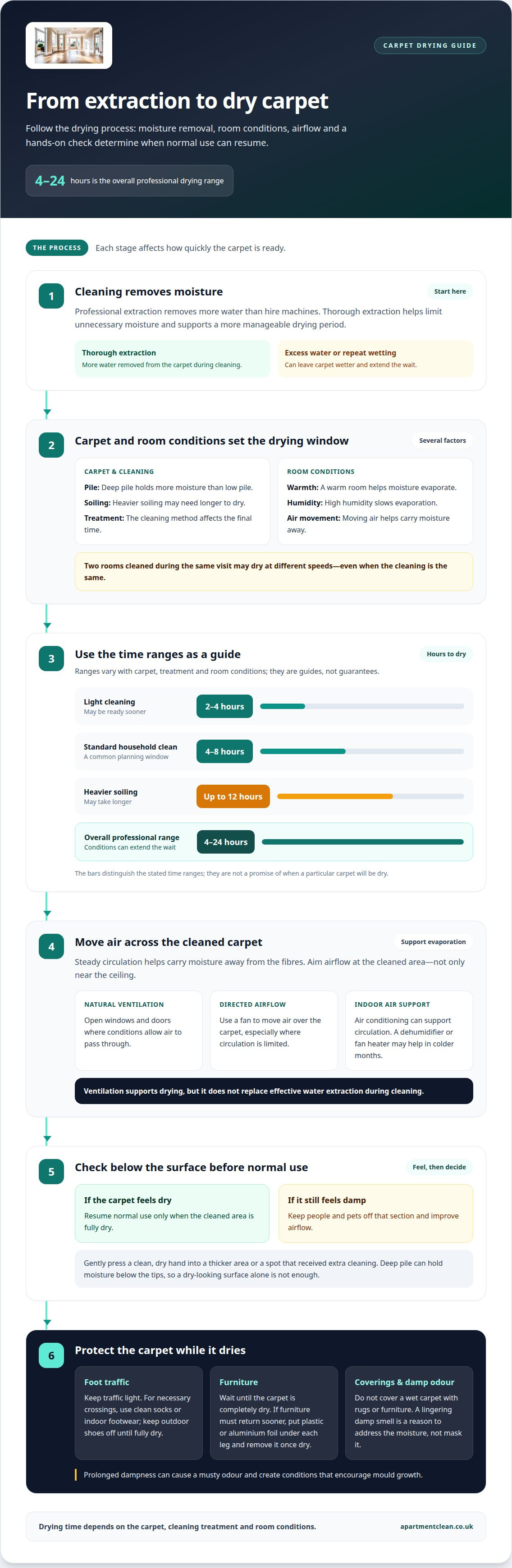
After professional cleaning, a carpet may take 4 to 24 hours to dry. The range reflects differences in carpet fibres, pile density, cleaning treatment, room temperature and humidity. A lightly cleaned carpet may be ready in 2 to 4 hours, while a heavily soiled carpet can take up to 12 hours.
For a standard household clean, expect around 4 to 8 hours. These ranges are guides, not competing estimates: the cleaning method and conditions determine where a particular room falls. A deep-pile carpet holds more moisture than a low-pile carpet, so two rooms cleaned during the same visit may dry at different speeds.
Room conditions matter as much as the carpet. High humidity slows evaporation, and colder weather can extend drying time. A warm room with moving air helps moisture evaporate. Fans improve circulation; opening windows and doors can help when conditions allow. A dehumidifier can reduce moisture in the room, while a fan heater can help in colder weather.
Professionals support faster drying by controlling how much water enters the carpet and extracting moisture thoroughly. Professional extraction machines remove more water than hire machines, which may leave more moisture behind. Experienced commercial cleaning specialists such as RPS Building Services utilise high-performance extraction and airflow management to keep downtime to a minimum. The cleaning treatment, carpet condition and room ventilation all affect the final drying time.
When planning around a cleaning appointment, allow several hours before using the room normally. A morning clean gives the carpet the rest of the day to dry, although deep pile, heavy soiling or humid conditions may extend that time. Keep the room ventilated and use fans to encourage airflow. Check how the carpet feels across the cleaned area, especially in thicker sections, rather than judging by the surface alone.
- Light cleaning: typically 2 to 4 hours.
- Standard household cleaning: typically 4 to 8 hours.
- Heavier soiling: can take up to 12 hours.
- Overall range: 4 to 24 hours, depending on carpet and room conditions.
How professionals manage air circulation and ventilation
Air movement helps moisture evaporate from carpet fibres after cleaning. Professionals consider room ventilation as well as the carpet itself. A closed room can trap humid air near the floor and slow evaporation. Opening a window or door can move air through the space, while a fan circulates it across the carpet.
Airflow works best when it reaches the cleaned area rather than moving only near the ceiling. A professional may direct a fan over the carpet, adjusting its position to reach areas with limited circulation. In a room with little natural ventilation, air conditioning can also support circulation. These measures help carry moisture away from the fibres.
Room humidity affects drying. High humidity slows the process because moisture evaporates less readily into already damp air. Opening windows and doors can help, depending on the air entering the room. In colder months, a dehumidifier or fan heater can support evaporation. A fan heater adds warmth while moving air, addressing two conditions that can slow drying.
Professionals can combine ventilation methods to suit the room. An open doorway may improve airflow, while a fan keeps air moving across the carpet. In a poorly ventilated room, air conditioning may also help. The aim is steady circulation, not simply heating the room or opening a window without moving air across the floor.
- Natural ventilation: Open windows and doors where conditions allow air to pass through.
- Directed airflow: Use fans to move air over the cleaned carpet.
- Indoor air support: Consider air conditioning, or use a dehumidifier or fan heater during colder months.
These methods support evaporation, but they do not replace effective water extraction during cleaning. Carpet pile, treatment and room humidity still affect drying. In Manchester’s colder months, ventilation and warmth may need particular attention. Consider the room conditions when planning how to encourage airflow after cleaning.
Carpet rippling as it dries
Ripples can appear as a carpet dries because moisture affects its fibres and backing. Damp material may expand, and drying can reveal uneven tension across the floor. A wave near a doorway or wall may become more noticeable as the surface changes from damp to dry.
The amount of water used, carpet construction and fitting all affect rippling. A heavily wetted area, for example, may dry at a different rate from a lightly cleaned section. A carpet that was already loose may also show waves more clearly when damp. These signs alone do not identify the cause.
Do not pull or stretch a damp carpet yourself. Pressure can shift the material or damage its edges, particularly near thresholds and stairs. Keep furniture off rippled areas until they are dry, and maintain airflow through the room. This gives the carpet time to dry evenly without extra weight on the affected section.
Once the carpet is dry, look at the same area from several angles. Note whether the ripple has changed, whether it follows a seam and whether the carpet edge remains secure. If waves remain or the carpet has lifted near a threshold, arrange an assessment rather than trying to force it flat. Persistent rippling may need attention beyond the cleaning process.
A small wave that becomes less visible as moisture leaves is different from a raised edge that remains after the carpet feels dry. Note where the change appears and when you noticed it. This makes it easier to explain the issue when arranging professional cleaning support.
- Allow the carpet to dry fully before judging persistent ripples.
- Keep furniture away from uneven areas while they dry.
- Note whether the ripple is near a seam, wall or threshold.
If you’re arranging a property clean, get cleaning support as part of your end-of-tenancy plans.
Apartment Clean
Apartment Clean helps make cleaning plans more manageable when you’re preparing to leave a property. If carpet drying affects access, furniture arrangements or your moving schedule, allow time for the carpet to dry before replacing items or using the room normally.
For a broader move-out clean, Apartment Clean offers End Of Tenancy Cleaning. It can help bring the rest of the property into order while you plan around damp carpet and room access. Keep the drying area clear, and factor ventilation and carpet condition into your schedule.
For practical help planning your property clean, contact Apartment Clean.
Plan your next move with confidence
Carpet drying time can affect when you move furniture, arrange access or finish preparing a property. Build the waiting time into your plans, especially if rooms need to be clear for a move. A little coordination can help you avoid rushing back into a damp space or disrupting other cleaning tasks.
For a wider property clean, Apartment Clean offers End Of Tenancy Cleaning, including End Of Tenancy Cleaning Manchester and Manchester End Of Tenancy Cleaning. These services can help bring the property into order as you prepare to leave. When arranging a professional clean, share your schedule and any carpet-drying concerns.
Knowing how long carpets take to dry after cleaning helps you set a realistic timetable for using each room again. Keep plans flexible around the carpet’s condition, and let it dry fully before returning furniture or resuming normal foot traffic.
Contact Apartment Clean to discuss your end-of-tenancy cleaning needs and plan your next step with confidence.
Frequently Asked Questions
How Long Do Carpets Take to Dry After Cleaning?
Carpets can take 4 to 24 hours to dry after cleaning. For anyone asking how long for carpets to dry after cleaning, the useful estimate depends on the work done and the room. A lightly cleaned carpet may dry in 2 to 4 hours, while standard household cleaning typically takes 4 to 8 hours. Check thicker areas too, since the surface may feel dry before deeper fibres.
How long does carpet take to dry after professional steam cleaning?
After professional steam cleaning, allow several hours, with drying potentially taking 4 to 24 hours. “Steam cleaning” is often used to describe hot-water extraction, but the treatment and equipment can vary. A heavily soiled carpet or dense pile may need more time than a lightly treated, low-pile carpet. Keep the room ventilated and wait until the carpet feels dry throughout before returning to normal use.
How long does carpet take to dry after hot water extraction?
Hot-water extraction carpets can take 4 to 24 hours to dry, depending on the cleaning and room conditions. Effective extraction removes water from the carpet, while remaining moisture evaporates afterwards. For example, a low-pile carpet in a warm, ventilated room may dry sooner than dense pile in a cool, humid room. Avoid setting a fixed return time without considering those differences.
How long does carpet take to dry after carpet shampooing?
Shampooed carpets may take several hours to dry, depending on how much moisture the process leaves behind. A lightly treated area may dry sooner than a heavily soiled section that needs more cleaning. Carpet thickness and room humidity also matter. Keep furniture off the carpet until it is dry, and avoid covering damp areas with rugs that could restrict evaporation.
How long does carpet take to dry after dry carpet cleaning?
Dry carpet cleaning uses a different approach from water-based extraction, so drying depends on the specific treatment and amount of moisture involved. Some methods use little water, while others leave dampness that still needs time to evaporate. Check the whole cleaned area rather than relying on a single spot. A dry surface and a dry feel through the pile indicate the carpet is ready for normal use.
What factors affect carpet drying time, such as pile, underlay and humidity?
Carpet pile, room humidity, temperature, cleaning treatment and the amount of water extracted all affect drying time. Deep pile holds more moisture than low pile, and humid air slows evaporation. Underlay may also retain moisture if water passes through the carpet backing, extending the time before the floor feels dry. For example, thick carpet in a cool, humid room can take longer to dry than low pile in a warm, ventilated space.