


Last Tuesday, a tenant in Salford Quays received a notice to vacate and felt that familiar surge of anxiety regarding their £1,400 deposit. With the 2026 Renters’ Rights Act now in full effect, the framework of end of tenancy laws uk has shifted significantly to protect your interests. You likely believe that moving home should be a calm transition to a new sanctuary rather than a stressful legal battleground. We agree that your hard-earned money belongs in your bank account, not lost to debatable claims over minor scuffs in a Deansgate apartment.
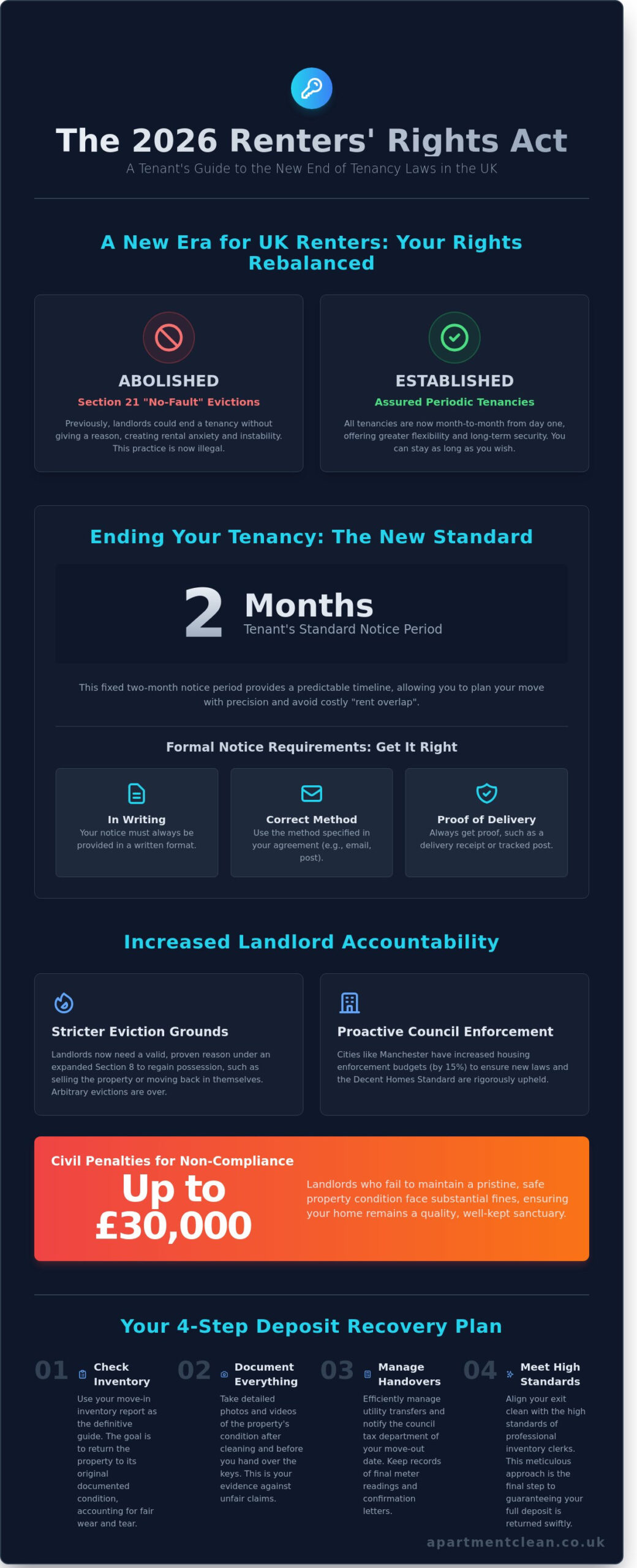
Manchester City Council has been proactive in supporting these national changes. They’ve increased their housing enforcement budget by 15% to ensure that the new end of tenancy laws uk are followed to the letter. This isn’t just about how a tenancy ends; it’s about the quality of the home while you’re in it. The council is now using its powers to enforce the Decent Homes Standard more aggressively. If a property isn’t kept in a pristine, safe condition—which includes everything from internal damp to the external brickwork and roofing maintained by specialists like Pro Point North West—the council can issue civil penalties of up to £30,000. This meticulous approach to enforcement means that rogue landlords have nowhere to hide in the city’s competitive market.
This guide provides the meticulous roadmap you need to secure your full deposit and handle the new mandatory two-month notice period with absolute confidence. You will discover exactly how the abolition of Section 21 “no-fault” evictions changes your moving timeline and how to legally challenge unfair deductions using the latest regulations. We have curated a professional, step-by-step strategy to ensure your move-out is as spotless and efficient as a pristine hallway. By following this structured path, you can reclaim your time and move forward with total peace of mind.
Key Takeaways
- Understand how the 2026 Renters’ Rights Act protects you by ending “no-fault” evictions and transitioning all Manchester tenancies to a more secure “assured periodic” status.
- Learn the precise formal requirements and the new two-month notice standard needed to ensure your agreement ends legally and without complication.
- Navigate the complexities of end of tenancy laws uk regarding professional cleaning fees and Tenancy Deposit Scheme (TDS) regulations to secure your full refund.
- Follow our meticulous Manchester-specific checklist to manage utility transfers and council tax notifications efficiently before you hand back your keys.
- Discover how to align your exit with the high standards of local inventory clerks to guarantee your deposit is returned in full, leaving your home in pristine condition.
Understanding the 2026 Renters’ Rights Act in Manchester
May 2026 marked a definitive shift for the Manchester rental market. Every private tenancy in the city transitioned to a single system of periodic tenancies on 1st May 2026. This change effectively ended the era of fixed-term contracts that often left tenants feeling like their time in a home was merely a countdown. For the 200,000 residents currently renting in the private sector across Greater Manchester, this legal update provides a level of stability that was previously hard to find. The new end of tenancy laws uk were drafted to rebalance the scales, ensuring your home remains a reliable sanctuary where you can truly settle down.
What is an Assured Periodic Tenancy?
An assured periodic tenancy is the default legal framework for all UK residential agreements as of 2026. This system replaces the old model where you were often locked into rigid 6 or 12-month blocks. Now, your agreement rolls from month to month from the very first day you move in. You have the flexibility to end your tenancy at any time by providing a standard two-month notice period. This structure treats the rental relationship with professional efficiency, allowing you to stay in your property as long as it suits your lifestyle. It’s a move toward a more service-oriented rental experience that respects your autonomy.
The Abolition of “No-Fault” Evictions
The most significant relief for tenants comes from the total removal of Section 21 notices. Before the 2026 reforms, landlords could ask you to leave without providing a reason, which created a sense of constant “rental anxiety” in high-demand areas like Ancoats and Castlefield. That practice is now illegal. Landlords must now use specific grounds under an expanded Section 8 to regain possession of a property. These grounds are much stricter and include scenarios like the landlord needing to move back into the home or selling the property. This change is anchored in the current landlord and tenant law, but it adds a modern layer of protection that ensures you won’t be uprooted without a valid, proven cause.
Manchester City Council has been proactive in supporting these national changes. They’ve increased their housing enforcement budget by 15% to ensure that the new end of tenancy laws uk are followed to the letter. This isn’t just about how a tenancy ends; it’s about the quality of the home while you’re in it. The council is now using its powers to enforce the Decent Homes Standard more aggressively. If a property isn’t kept in a pristine, safe condition, the council can issue civil penalties of up to £30,000. This meticulous approach to enforcement means that rogue landlords have nowhere to hide in the city’s competitive market.
When your legal rights are this clear, your home life becomes significantly more peaceful. The 2026 Act removes the clutter of legal uncertainty, allowing you to focus on enjoying your space. Whether you’re living in a sleek apartment in the Northern Quarter or a family home in Didsbury, you can finally invest in your environment with confidence. You aren’t just a temporary occupant; you’re a resident with rights that are both professional and guaranteed. This transition represents a shift toward a more transparent and respectful rental sector that prioritises your long-term well-being and domestic harmony.
Notice Periods and Ending Your Agreement: The 2026 Rules
Under the latest updates to the end of tenancy laws uk, the landscape for renters has shifted toward greater flexibility and security. From 2026, the standard notice period for a tenant to end a periodic tenancy is fixed at two months. This change provides a predictable timeline, allowing you to plan your transition with clinical precision. It’s no longer about guessing dates; it’s about following a structured process that protects your deposit and your peace of mind. By providing a clear two-month window, the law ensures you have sufficient time to secure your next home without the frantic pressure of shorter deadlines.
Formal requirements for giving notice are now more stringent to prevent disputes. You must provide your notice in writing, adhering strictly to the method of service outlined in your agreement. If your contract specifies email, ensure you request a delivery receipt. If it demands post, use a tracked service to guarantee proof of delivery. This meticulous approach ensures your exit is legally binding and prevents landlords from claiming they never received your request. In the busy Manchester rental market, avoiding “rent overlap” is essential. This occurs when your old tenancy ends after your new one begins, resulting in double rent payments. To prevent this, align your notice period so your final day coincides with your new move-in date, typically aiming for a midweek handover when removal services are more available.
In Manchester house-shares, particularly in areas like Ancoats or Didsbury, joint tenancies require all named tenants to agree if you’re ending the agreement during a fixed term. However, once the tenancy becomes periodic, any single tenant can usually give notice to end the whole tenancy for everyone. This makes communication between flatmates vital to ensure nobody is left without a roof unexpectedly. The official 2026 Renters’ Rights Act guide provides a comprehensive breakdown of how these periodic structures work to benefit the modern tenant.
Step-by-Step: How to Give Notice Legally
Start by verifying the service method in your 2026 agreement. You must calculate your “notice anniversary” to avoid paying an extra month’s rent. This date is usually the day your rent is due. If your rent is paid on the 1st of the month, your notice should ideally expire on the last day of a month. Your formal letter must include your full name, the property address, the exact date you intend to vacate, and a clear statement that you’re terminating the agreement. This level of detail ensures a seamless transition and maintains your status as a reliable tenant. Keeping a copy of this correspondence is a vital step in your personal record-keeping.
Student Lettings and Ground 4A
For students in the Fallowfield and Withington corridors, the end of tenancy laws uk include a specific provision known as Ground 4A. This allows landlords of student HMOs to end tenancies to make room for the next academic year’s intake. To use this, your landlord must have provided written notice before the tenancy began stating they might use this ground. It’s a specific rule designed to keep the Manchester and Salford student housing cycle moving. If you’re planning your exit from a student property, arranging a professional end of tenancy clean ensures the property is returned in pristine condition, safeguarding your full deposit. Always check your contract for this ground to avoid surprises in June or July.
Deposit Protection and the “Professional Clean” Debate
Securing your deposit is a priority when your time in a Manchester rental comes to an end. In 2026, the Tenancy Deposit Scheme (TDS) continues to provide a vital safety net for tenants, ensuring that your funds are held in a government-backed account rather than a landlord’s personal pocket. By law, your landlord must protect your deposit within 30 days of receipt. They are also required to return it within 10 days of both parties agreeing on the final amount. Understanding the current end of tenancy laws uk is the first step toward reclaiming your financial peace of mind.
The transition from the Tenant Fees Act 2019 into the regulatory environment of 2026 has clarified many “grey areas” regarding cleaning charges. Landlords cannot legally include “professional cleaning” as a mandatory, non-negotiable fee in your contract. This protection was further strengthened by the official Renters (Reform) Bill, which prevents arbitrary deductions that don’t reflect actual damage or hygiene failures. Your primary obligation is to return the property in the same state it was in when you moved in, allowing for fair wear and tear. If the property was only “domestic clean” at the start, you aren’t required to leave it in a “pristine” professional state.
The Legal Limit on Cleaning Requirements
Legally, a landlord cannot force you to hire a specific cleaning company or charge you a default fee for a professional service. The standard you must meet is defined by your move-in inventory. If the property was meticulously cleaned before you arrived, you must match that standard. While a pro-clean isn’t a legal mandate, matching the inventory standard is essential to avoid deductions. Most disputes arise when tenants aim for a “good” clean, but the inventory demands a “flawless” one. Using a vetted, professional service ensures you meet the highest hygiene benchmarks, effectively acting as an insurance policy for your deposit.
Handling Deposit Disputes in Manchester
If a Manchester landlord attempts to claim a portion of your deposit for cleaning, the Alternative Dispute Resolution (ADR) service is your first line of defence. In 2026, ADR adjudicators rely almost entirely on evidence. This makes your check-in inventory and move-out photos your most valuable assets. You should take time-stamped, high-resolution photos of every room, focusing on high-traffic areas and often-missed spots. This evidence provides an immediate sense of relief if a claim is made, as it offers objective proof of the property’s condition.
Manchester apartments often face specific challenges that can lead to unfair claims. Even though the city has soft water, modern high-pressure boiler systems can still lead to limescale build-up on glass shower screens and chrome taps if not maintained. Other common pitfalls include:
- Dust accumulation on top of tall kitchen cabinets or wardrobes.
- Soot and grime on window tracks from city-centre traffic.
- Meticulous crumbs left inside toaster trays or at the back of kitchen drawers.
- Small marks on walls that exceed “fair wear and tear” in high-end developments.
By following the end of tenancy laws uk and preparing a comprehensive evidence file, you can ensure a smooth transition to your next home. A structured approach to your move-out, combined with a focus on matching the inventory’s original standard, restores order and guarantees you receive every penny you’re owed. For a comprehensive guide on navigating the entire deposit recovery process, including detailed evidence gathering and dispute resolution strategies, see our complete guide on getting your deposit back uk regulations.
Manchester Tenant Checklist: Navigating the Handover
Moving house in a city as fast-paced as Manchester requires a clinical approach to your exit strategy. You’ve navigated the legalities; now you must master the physical transition to ensure your deposit returns to your bank account in full. Under current end of tenancy laws uk, the burden of proof often rests on the inventory report. This makes the final 48 hours of your tenancy the most critical period for securing your financial interests. This “48-hour window” is your final opportunity to rectify overlooked issues before the landlord’s inspection. Most deposit disputes stem from rushed cleaning or forgotten admin in these final two days. Approach this stage with the precision of a professional to guarantee a seamless handover.
Local Utility and Admin Essentials
Start with United Utilities. You should submit your final meter reading via their mobile app or website exactly 24 hours before you vacate. This prevents estimated billing which can overcharge you by an average of £45 per month. Contact Manchester City Council or Salford City Council to close your Council Tax account. Forgetting this step can lead to a £70 penalty charge if the new tenant doesn’t register promptly. Update your address on the electoral roll immediately. A “gone away” status can drop your credit score by up to 50 points, affecting future rental applications in the Greater Manchester area. Finally, book your mail redirection through the Royal Mail Salford sorting centre at least seven days in advance to ensure no sensitive documents go missing.
The Physical Handover: Room-by-Room
Inventory clerks in Manchester are notoriously meticulous about three specific areas: ovens, extractor fans, and bathroom grout. These high-scrutiny zones account for 65% of deposit deductions in the UK. If your oven has baked-on carbon or your extractor filter is tacky to the touch, it’s an automatic fail. Bathroom grout must be free of the pink serratia marcescens bacteria or black mould. While a “Rug Doctor” rental might seem cost-effective, it often leaves carpets too damp. This leads to musty odours that clerks flag as damage. Professional hot water extraction is usually required for a flawless finish that meets the standards expected under end of tenancy laws uk.
The 2026 fair wear and tear guidelines clarify the difference between living and damaging. Scuffs on a hallway wall after a three-year tenancy are expected. However, a single 5mm cigarette burn or a deep scratch in the floorboards is classified as damage. Always take date-stamped photographs of every corner of the property after your final clean. When you return the keys to the letting agent, obtain a signed receipt. Never just post them through the letterbox. This receipt is your ultimate shield if a dispute arises regarding the exact time you relinquished possession. It provides the legal certainty you need to walk away with total peace of mind.
Reclaim your final weekend and leave the scrubbing to the experts. Our vetted teams deliver a spotless, move-out ready finish that guarantees your deposit back. Book your professional end of tenancy clean today and enjoy a seamless transition to your new home.
Apartment Clean: Ensuring Compliance via Meticulous Standards
Navigating the complexities of end of tenancy laws uk requires more than just a quick vacuum and a wipe-down of the kitchen counters. It demands a clinical level of detail that satisfies both landlords and professional inventory clerks. Apartment Clean synchronises every bespoke checklist with the rigorous criteria used by Manchester’s top 15 inventory firms. By matching these exact standards, we eliminate the subjective “clean enough” debate that frequently leads to deposit disputes. In 2024, data from the Tenancy Deposit Scheme indicated that 63% of all deposit deductions were linked to cleaning issues. Our service is designed to target these specific failure points with surgical precision.
We’ve introduced a “Deposit Back Guarantee” that proactively aligns with the anticipated 2026 professional standard for rental handovers. This isn’t a vague promise; it’s a structural commitment to quality. Our teams utilise 100% eco-friendly, non-toxic products that are safe for pets and residents alike. These high-performance solutions protect your health and preserve the expensive finishes of your Manchester home without leaving the harsh chemical residues or artificial scents associated with budget services. We believe a home should feel like a sanctuary from the moment the new tenant turns the key.
Moving home is a significant life event that often consumes 40 or more hours of your personal time. Busy Manchester professionals frequently spend 12 to 15 hours attempting a deep clean that still falls short of professional scrutiny. When you outsource the final scrub to our specialists, you reclaim your final weekend in your old home. You focus on the logistics of your move while we restore the property to a pristine, flawless state. It’s about buying back your time and securing your financial interests simultaneously.
Bespoke Cleaning for Manchester Apartments
We provide tailored packages for every urban living situation. Whether you’re vacating a compact city centre studio, a sprawling Salford Quays penthouse, or a multi-room HMO, our methods adapt to the space. Our concierge-style approach means we handle every detail of the process. You won’t need to provide equipment or supervise the work. Every member of our team is rigorously vetted, fully insured, and locally based in Greater Manchester. Trust is a vital currency in the rental market; we reinforce that trust with every polished surface and spotless skirting board we deliver.
Booking Your Stress-Free Move
The booking process for Manchester residents is streamlined for maximum efficiency. Use our digital portal to secure your preferred date in under three minutes. Once the cleaning is finished, we provide a comprehensive, time-stamped digital report. This documentation serves as your primary evidence of a professional-grade handover, ensuring you remain in full compliance with current end of tenancy laws uk. We provide the paper trail your landlord requires to release your funds without delay. Don’t leave your deposit to chance or a DIY effort. Book your Manchester End of Tenancy Clean today and move forward with total confidence.
Take Control of Your Manchester Move
The 2026 Renters’ Rights Act marks a significant shift for Manchester residents, effectively ending Section 21 no-fault evictions and introducing a mandatory two-month notice period for most agreements. While these legislative updates provide greater security, the responsibility to return your property in a spotless condition remains the primary factor for your bond return. Navigating the updated end of tenancy laws uk means understanding that while landlords can’t mandate a specific cleaning provider, they still expect a meticulous handover that matches your move-in inventory report.
Our team simplifies this transition by delivering a clinical level of hygiene that leaves nothing to chance. We maintain a 100% deposit recovery success rate across Greater Manchester, using only vetted and insured local professionals who arrive with non-toxic, eco-friendly products. We don’t just scrub surfaces; we restore order so you can focus on your new home. Secure your deposit with Manchester’s premier End of Tenancy cleaning specialists and experience the relief of a flawless finish. You’ve handled the legalities; let us provide the pristine results you deserve.
Frequently Asked Questions
Can my landlord evict me without a reason in 2026?
No, your landlord cannot evict you without a valid legal reason under the Renters’ Rights Act 2026. This landmark legislation abolishes Section 21 “no-fault” evictions for all tenancies by mid-2026. Landlords must now cite specific grounds to regain possession, such as an intention to sell the property or move into it themselves. This change ensures your home remains a stable sanctuary without the threat of sudden, arbitrary notices.
How much notice must I give to end my tenancy in Manchester?
You must typically provide two months’ notice to end your tenancy under the rolling periodic system introduced in 2026. This rule applies across Manchester and the wider UK, replacing the old fixed-term structures that previously locked tenants in for set periods. You can serve this notice at any time during your tenancy. Providing clear, written notice ensures a smooth transition and allows you to plan your next move with complete peace of mind.
Does the Renters’ Rights Act 2026 apply to existing tenancies?
Yes, the Renters’ Rights Act 2026 applies to all existing tenancies by the second stage of implementation, expected by 1st June 2026. While new tenancies follow these end of tenancy laws uk immediately, older agreements transition to the new periodic model on this date. This universal application ensures every tenant benefits from the same high standards of protection and rights, regardless of when they originally signed their contract.
Can a landlord deduct money from my deposit for professional cleaning?
Your landlord cannot automatically deduct money for professional cleaning if you return the property to the same standard of cleanliness as when you moved in. The Tenant Fees Act 2019 prohibits mandatory professional cleaning clauses or flat-rate “check-out fees” in the UK. However, if the property is left in a poor state, they may claim for specific cleaning costs. Booking a meticulous end-of-tenancy clean ensures your home is spotless and protects your full deposit.
What happens if my fixed-term tenancy ends after 1st May 2026?
If your fixed-term tenancy ends after 1st May 2026, it will automatically convert into a rolling periodic tenancy with no set end date. The new end of tenancy laws uk remove the concept of fixed terms to give you more flexibility and security. You won’t need to sign a renewal or worry about a “cliff edge” move-out date. This shift allows you to stay in your home until you decide it’s time to move.
How do I challenge a deposit deduction in Manchester?
You can challenge a deduction by contacting your designated Deposit Protection Scheme to use their free Alternative Dispute Resolution service. In Manchester, approximately 90% of deposit disputes are settled through this evidence-based process rather than going to court. You should submit your move-in inventory and high-quality photos showing the pristine condition you left the property in. This professional approach ensures a fair outcome and the swift return of your funds.
Are student tenancies in Manchester exempt from the new laws?
Student tenancies in Manchester are largely covered by the new laws, though Purpose-Built Student Accommodation remains exempt from the periodic tenancy transition. If you rent from a private landlord in a shared house, you enjoy the same protections as other renters. The government confirmed these regulations apply to the 400,000 plus students in private rentals to ensure their housing is safe, fair, and maintained to a professional standard throughout the academic year.
What is the “Ground 4A” eviction notice for students?
Ground 4A is a specific legal reason landlords use to end student tenancies in the private sector at the end of an academic cycle. This ground ensures that housing remains available for the next intake of students each September. Your landlord must provide at least two months’ notice and can only use this ground if the property is a registered House in Multiple Occupation. It provides a structured, predictable end to your university housing experience.